

posted 5th August 2026
Whether you own a café, bakery, sandwich shop, takeaway or catering company, choosing the right food wrapping paper is essential. The packaging you use doesn’t only protect food, it also affects presentation, freshness, food safety and your environmental credentials.
Two popular options are greaseproof paper and wax paper. Although they may look similar, they are designed for different uses. Understanding their different properties will help you choose the best food wrap for your products while supporting your sustainability objectives.
What is Greaseproof Paper?
Greaseproof paper is a specially treated paper with a dense fibre structure that naturally resists oil and grease without requiring a plastic or wax coating. It is widely used throughout the foodservice industry for wrapping hot and greasy foods as well as baked items. It’s also used for lining trays and baskets that will come into contact with food.
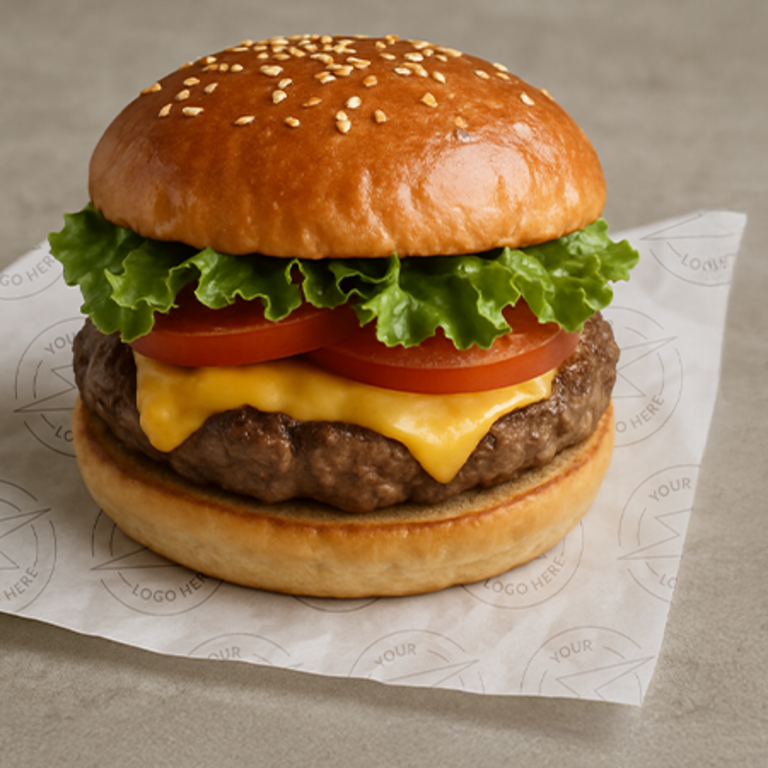
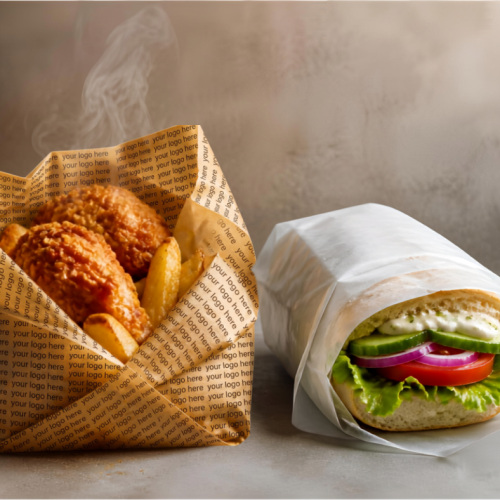
Many greaseproof papers are also available with custom printing, making them an excellent choice for businesses looking to reinforce their brand at the same time as protecting their food.
What is Wax Paper?
Wax paper is coated with a thin layer of food-safe wax, creating a barrier that repels moisture and helps keep food fresh. It is commonly used for wrapping chilled foods, separating food portions and covering prepared items before refrigeration.
Unlike greaseproof paper, wax paper is not designed for use in ovens or with high temperatures.
Greaseproof Paper vs Wax Paper: 5 Key Differences
1. Grease Resistance
Greaseproof paper is specifically engineered to prevent oils and fats from soaking through the paper, making it ideal for burgers, pastries, fried foods and baked goods.
Wax paper offers some grease resistance but performs best when protecting foods from moisture rather than heavy oils.
2. Heat Resistance
Greaseproof paper is oven-safe and suitable for many baking applications.
Wax paper should never be used in the oven, as the wax coating can melt or smoke at high temperatures.
3. Moisture Protection
Wax paper provides a stronger moisture barrier, helping prevent food from drying out during refrigerated storage.
Greaseproof paper provides limited moisture resistance but excels when handling oily foods.
4. Appearance and Branding
Greaseproof paper has a smooth, matte finish that produces excellent print quality for logos, patterns and branded food wraps.
Wax paper has a slightly glossy finish due to its coating, making high-quality printing more difficult.
5. Sustainability
Modern greaseproof paper is often manufactured using responsibly sourced paper fibres and is available in recyclable, biodegradable and compostable options when free from plastic coatings. Some printing companies (like Grease Lightning) also use eco-friendly inks to ensure the paper can be recycled after use.
Traditional wax paper can be more difficult to recycle due to its coating, although many manufacturers now produce wax paper using natural, plant-based waxes that offer improved sustainability.
Always check local recycling and composting guidance, as disposal options vary depending on the product and local authority.
When Should You Use Greaseproof Paper?
Greaseproof paper is the preferred choice when serving hot or greasy foods. It is particularly suitable for:
- Wrapping burgers, hot dogs, chips, and other hot food items
- Serving pastries, croissants and doughnuts
- Lining takeaway trays, baskets and food boxes
- Baking biscuits and pastries
- Custom printed food wrapping for cafés, bakeries and takeaway businesses
When Should You Use Wax Paper?
Wax paper performs best where moisture retention is more important than grease resistance. It is ideal for:
- Wrapping cold sandwiches
- Separating cheese, burgers or sliced meats during storage
- Wrapping confectionery and homemade sweets
- Covering prepared foods before refrigeration
- Protecting fresh produce and chilled baked goods from drying out
Which is More Sustainable?
As sustainability becomes a greater priority across the catering industry, businesses are increasingly looking for packaging that balances performance with environmental responsibility.
Greaseproof paper often offers the more sustainable solution, particularly when made from FSC®-certified paper and manufactured without plastic coatings. Many products can be recycled or composted after use, depending on the level of food contamination and local waste collection facilities.
Wax paper has also become more environmentally friendly in recent years, with some manufacturers replacing petroleum-based waxes with natural alternatives. However, disposal options vary, making it important to check the product specification before purchasing.
Choosing responsibly sourced food wrapping paper not only reduces environmental impact but also demonstrates your commitment to sustainable business practices, something today’s customers increasingly value.
So, Which Should You Choose?
The best food wrap depends on the type of food you’re serving.
If your business specialises in hot, greasy or freshly baked products, greaseproof paper is typically the better option thanks to its superior grease resistance, oven-safe properties and excellent printability.
If you’re wrapping chilled foods or products that need to retain moisture during storage, wax paper is likely to deliver better performance.
By understanding the strengths of each material, catering businesses can improve food quality, enhance presentation, reduce waste and make more sustainable packaging decisions.
We hope this article has helped you understand the difference between greaseproof paper and wax paper and helped you decide which is the best option for your catering business.
And if greaseproof paper is the food wrapping option of your choice, please look at the many sizes we have available, ready to customise with your company logo to help your brand stand out!